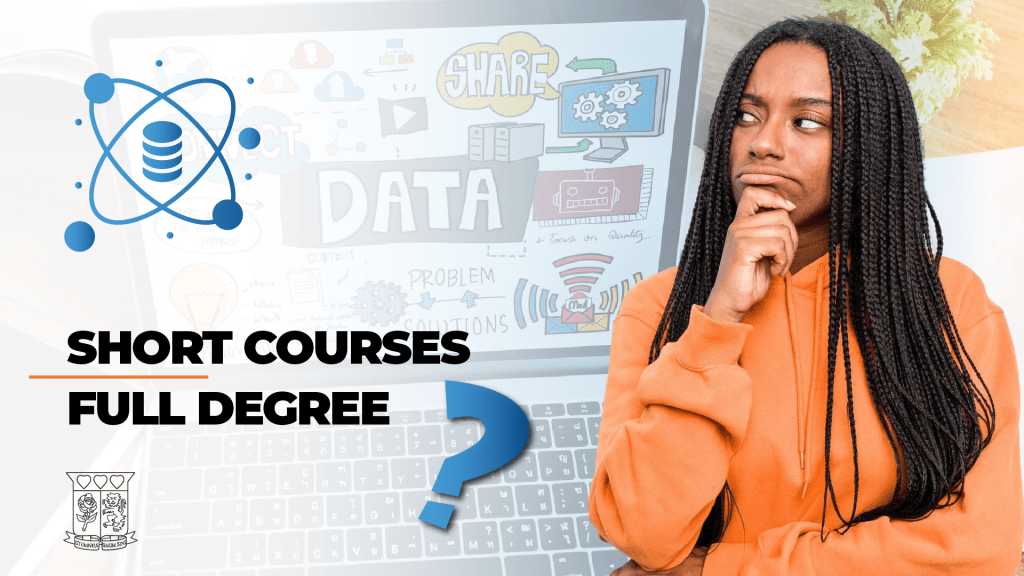
The Question That’s Quietly Shaping Thousands of Futures: Careers are being made and lost over a single skill gap and almost everyone considering a future in data is asking the same question.
Should I go back to university… or just take a short course?
It sounds like a simple choice but behind it lies something deeper. Time, money, uncertainty, and the fear of making the wrong decision.
Imagine two people. Lesley, just finished high school. She’s been told the “safe path” is a full degree. Four years, structured learning, and a recognized qualification. Then there’s Ryan. He is already working in marketing. He keeps hearing about dashboards, analytics, and AI. He doesn’t have four years. He needs a skill, now!
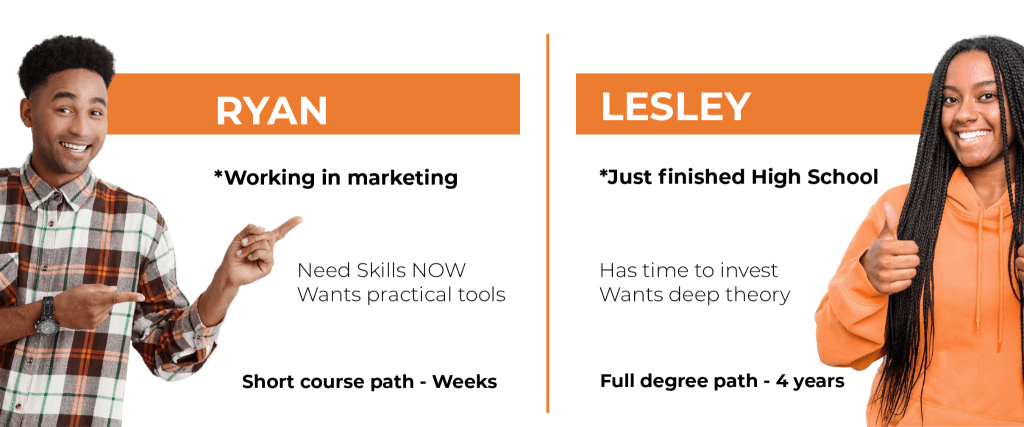
Both want the same thing: A future in data, but their paths couldn’t look more different.
So… who’s making the better choice?
For decades, full degrees have been the gold standard. They offer depth, structure, and a broad understanding of concepts. You don’t just learn how to analyze data; you learn why things work the way they do. You explore statistics, algorithms, and theory. You build a foundation that can last a lifetime.
For someone like Ryan, this path makes sense. He has time to grow into the field gradually.
But here’s the reality we don’t always talk about: By the time four years pass, the data landscape may have already shifted. Tools evolve. Technologies change. Industry demands move faster than most academic curricula and many graduates still find themselves asking: I have the degree… but do I have the skills employers actually want?
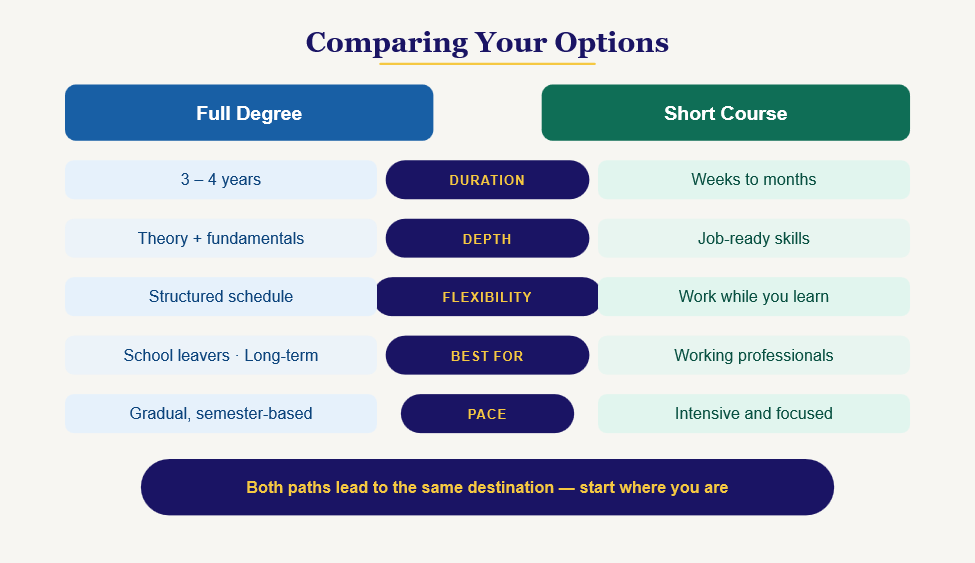
Instead of spending years learning theory first, you jump straight into tools like Excel, Power BI, Python, and data visualization. You build dashboards. You clean datasets. You solve real-world problems, sometimes within weeks.
For someone like Lesley, this is not just convenient. It’s transformational. In a matter of months, she can:
- Analyze business performance
- Build dashboards her team actually uses
- Make data-driven decisions
And suddenly, she’s no longer just part of the team, she is driving it with insights.
This is the philosophy behind the data programs at iLabAfrica-Strathmore University. Practical, industry-aligned learning designed to bridge the gap between knowledge and real-world application.
But short courses aren’t perfect either.
They require commitment, consistency, and a willingness to keep learning beyond the classroom.
So… Which One is Better?
Here’s the truth most people don’t expect: It is not about which is better. It’s about which is better for you, right now. Because data careers today are not linear. At Strathmore University, we’ve seen:
- Degree graduates enrolling in short courses to gain practical tools
- Working professionals transitioning into data without starting over
- Beginners building confidence step-by-step before advancing into deeper data science concepts
The lines are blurred, and that’s a good thing. A New Way to Think About It.
Instead of asking: Short course or degree? Ask:
1. What stage am I in my career?
2. How quickly do I need these skills?
3. Do I need practical tools now, or deeper theory first?
Because sometimes, the smartest path isn’t choosing one over the other. It’s combining both strategically. Where You Can Start a Practical Path into Data.
If you’re looking to take that first step, or your next one, there are flexible, industry-relevant options designed to meet you where you are. At Strathmore University, three key programs offer different entry points into the data space:
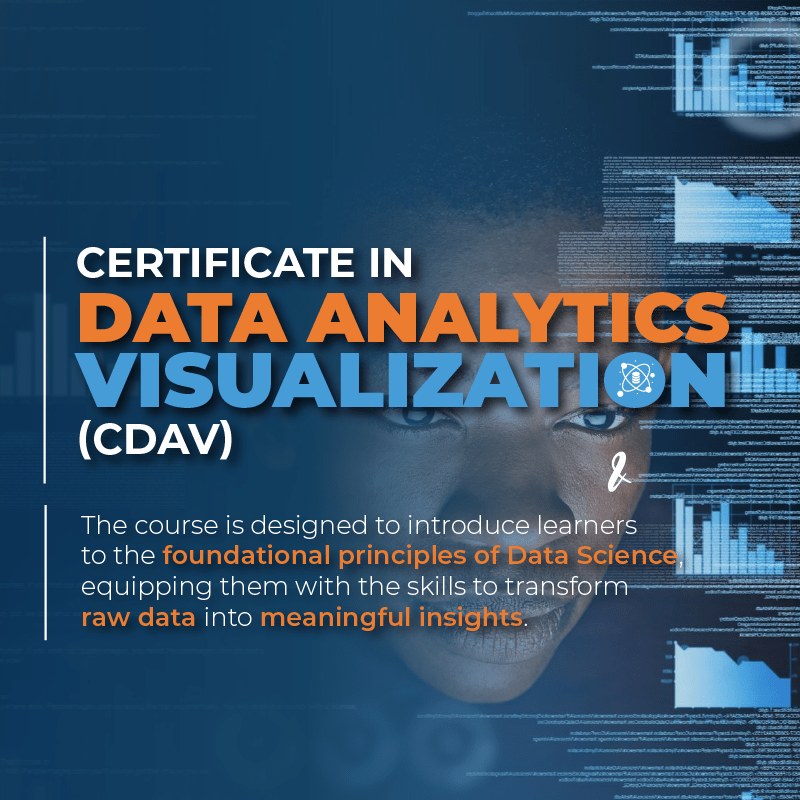
Certificate in Data Analytics and Visualization (CDAV)
Designed for those who want to go beyond basic analysis into storytelling with data.
- Data cleaning, analysis, and visualization
- Hands-on tools and real-world datasets
- Python programming
- Strong foundation for data-driven roles.
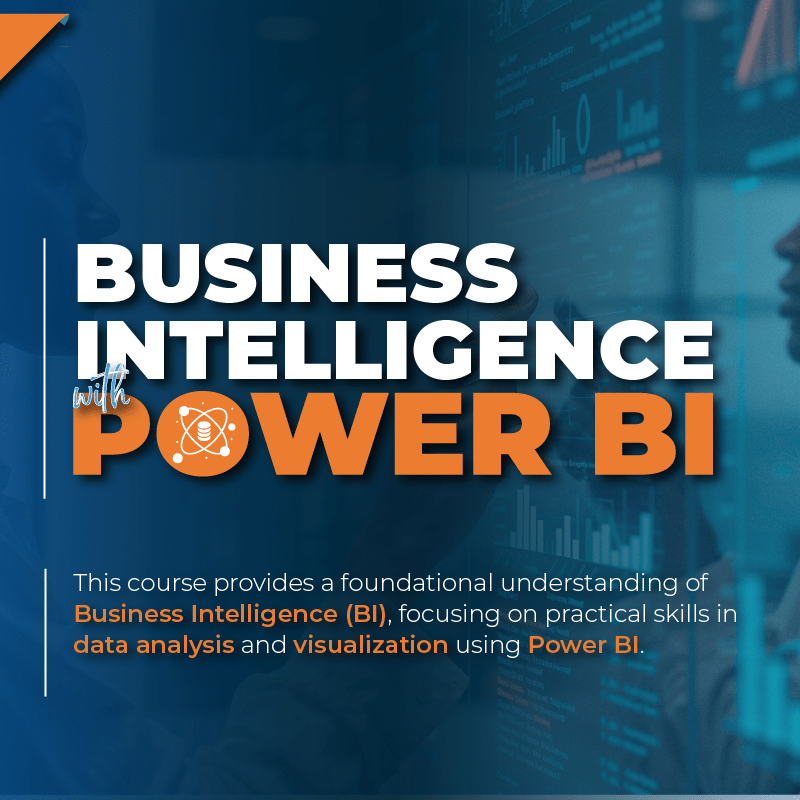
Business Intelligence with Power BI
Perfect for beginners and professionals who want to quickly gain practical, job-ready skills in data analysis and reporting.
- Learn to build interactive dashboards
- Turn raw data into actionable insights
Ideal for career starters and working professionals
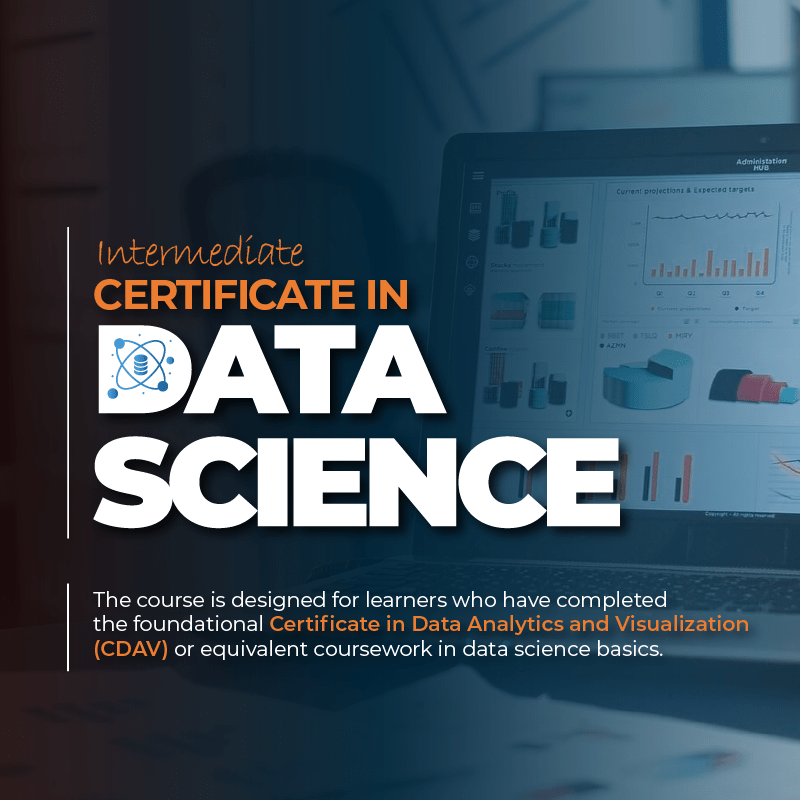
Intermediate Certificate in Data Science (ICDS)
For those ready to step into Python, machine learning, and advanced analytics.
- Introduction to machine learning
- Advanced analytics
Ideal progression after foundational courses
The Real Secret to Succeeding in Data.
Here’s what truly matters and it’s bigger than any single qualification:
Your ability to solve real problems using data
Your willingness to keep learning continuously
Your skill in turning data into meaningful insights.
Because in the end, employers don’t just hire certificates. They hire capability.

Which factors should aspiring data professionals consider when choosing between short courses and full degrees? Thank you and regards, Universitas Swasta Terbaik