

Not too long ago, a young professional sat staring at their phone. They had just ordered food online, checked their bank balance, liked a post on Instagram, and replied to an email. What they didn’t realize was that, in just five minutes, they had created data. Lots of it.
Hidden behind the scenes, data was quietly being collected, cleaned, and analyzed, all for one purpose. To help systems make decisions in real time, such as:
What food should be recommended next?
Was that bank transaction suspicious?
What kind of content should appear on their Instagram feed?
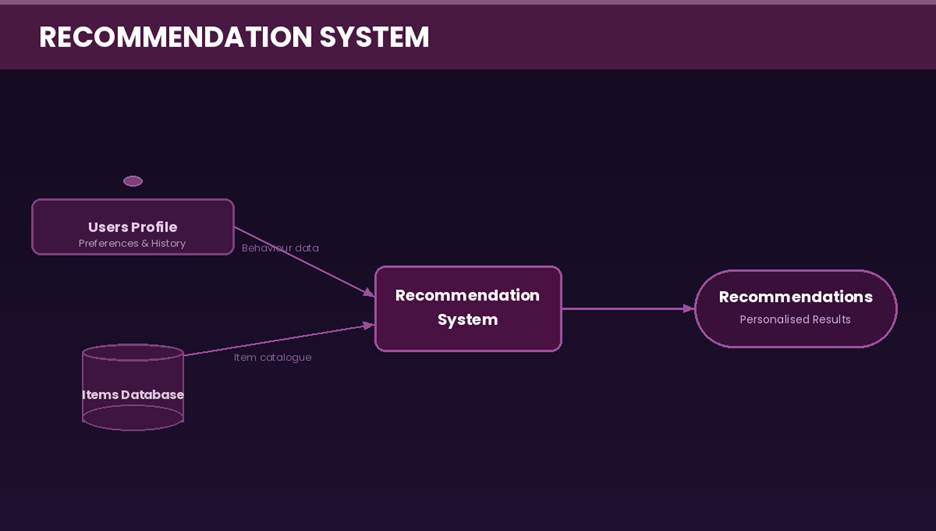
That invisible work happening quietly in the background is what we call data science.
So… What Is Data Science, Really?
Data science is simply the art of using data to understand what is happening, why it is happening, and what is likely to happen next.
Think of it as detective work. Data scientists gather clues (data), clean them up, look for patterns, and tell a story that helps people make better decisions.
You don’t need to be a “math genius” or a “coding wizard” to understand data science. At its heart, it’s about curiosity. The kind of questions people ask every day, include:
- Why did sales drop last month?
- Which patients are at higher risk?
- What strategy gives us better results?
- How can we improve efficiency, fairness, or profit?
If you’ve ever asked “Why?” and “What can we do better?”, you’ve already thought like a data scientist.
“But Does Data Science Apply to My Career?”
This is the most common question and the most exciting one. The answer is “yes” often in ways people don’t expect.
Let’s take a walk through a few careers.
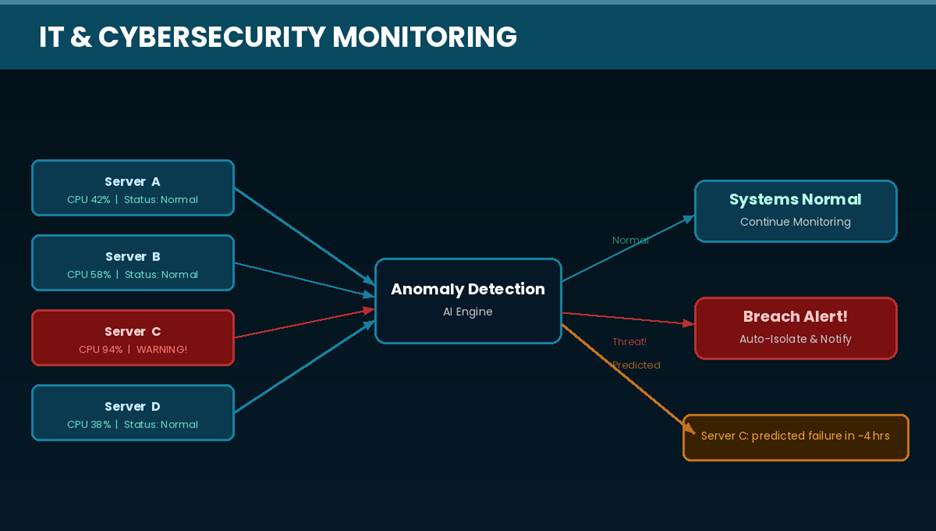
An IT student might use data science to monitor systems, predict failures, or improve cybersecurity by spotting unusual activity.
A law professional can use data to analyze case trends, predict litigation outcomes, or support evidence-based arguments.
Someone in communication or media can analyze audience behavior: what people read, watch, click, and share, and use those insights to craft stronger messages.
An engineer uses data science to optimize designs, reduce costs, predict maintenance needs, and improve safety.
A culinary arts professional might analyze customer preferences, sales trends, food waste, and pricing to design better menus and profitable kitchens.
A software developer uses data science to improve user experience, personalize applications, detect bugs, and build smarter systems.
And beyond that:
- Healthcare uses data to save lives.
- Business uses data to grow sustainably.
- Sports uses data to improve performance.
- Education uses data to support learners.
- Agriculture uses data to improve yields and reduce waste.
Data science doesn’t replace your career! It enhances it.
We live in a world where decisions based on guesswork are slowly being replaced by decisions based on evidence.
Organizations today don’t just ask:
“What do you think?”
They ask:
“What does the data say?”
Learning data science gives you a powerful skill. The ability to translate numbers into meaning and meaning into action. It makes you more confident, more relevant, and more competitive, no matter your field.
Where Do BI, CDAV, and ICDS Fit In?
Think of data science learning as a journey:
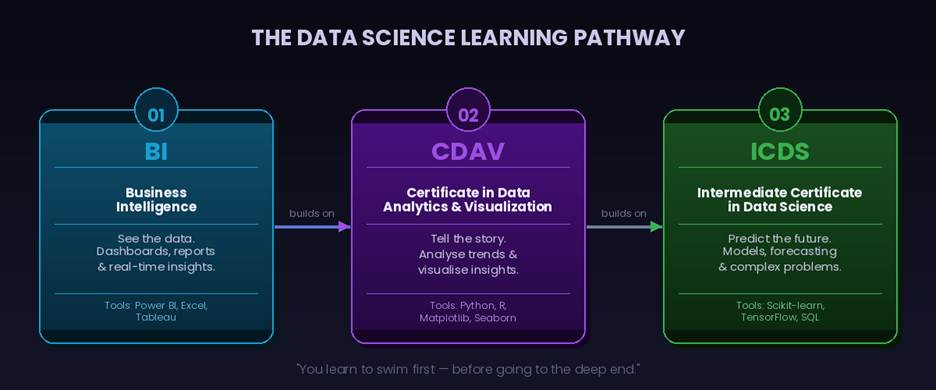
- Business Intelligence (BI) is where you learn to see the data. You create dashboards, reports, and insights that help organizations understand what is happening right now.
- Certificate in Data Analytics and Visualization (CDAV) is where data starts to tell stories. You analyze trends, visualize insights, and communicate findings clearly even to non-technical audiences.
- Intermediate Certificate in Data Science (ICDS) is where you go deeper. You work with more advanced tools and techniques to predict outcomes, model scenarios, and solve complex problems.
Each course builds confidence step by step. You don’t jump into the deep end. You learn to swim first.
The Real Story
The real story of data science is not about machines, code, or charts.
It’s about people. People who want to make better decisions, tell clearer stories, and create real impact in their fields.
Whether you are just starting out, changing careers, or strengthening your current profession, data science gives you a new lens to see the world. And once you see through that lens, you start to notice something powerful.
Visit our Data Science Department: Data Science