
NAIROBI, Kenya — What happens when the people learning to defend digital systems are challenged to think like the people trying to break them?
That question drove the JengaSec Hackathon 2026, held at Strathmore University from 14–16 October. Bringing together emerging cybersecurity talent and industry experts, the event tackled a growing challenge for Kenya’s digital economy: protecting the banking sector from evolving cyber threats.
Organised by the Strathmore Cybersecurity Club, with support from NCBA LOOP, ISACA Kenya Chapter, Hack The Box, SheLeadsTech Kenya, Digital Africa, @iLabAfrica – Strathmore University and the Strathmore Energy Research Centre (SERC), the hackathon combined hands-on security challenges with discussions on cyber incidents, artificial intelligence (AI), careers and homegrown innovation.
Security must start before a system goes live
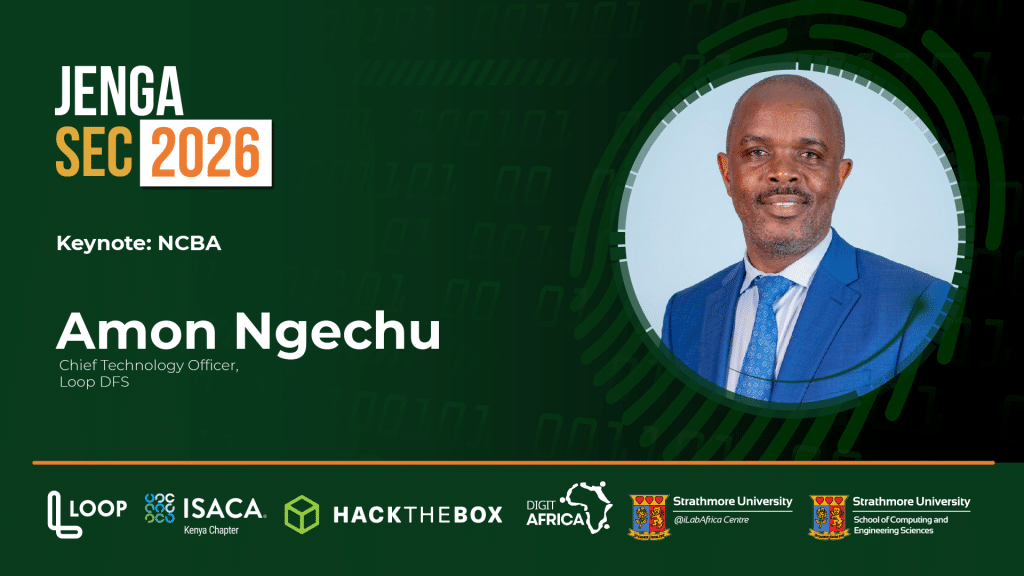
The first day, themed Build It Right, opened with a keynote from Amon Ngechu, CTO of NCBA LOOP Kenya, who highlighted how technological advances continue to reshape cybersecurity. Amid these changes, however, one priority remains constant: the customer.
As Mr Ngechu emphasized, “It’s all about the customer. Can they trust your app?” For banks and fintechs, security is essential to customer confidence and the long-term sustainability of digital services.
This message was reinforced by Frederick Wahome of the Kenya Cyber Security and Forensics Association (KCSFA), who shared a sobering account of a young innovator whose security solution for a bank had serious consequences because security had not been built into the system from the start.
The lesson for the student innovators was clear: security must be built in from the beginning, not added after vulnerabilities emerge. Identifying and addressing weaknesses before launch helps protect customer data, business operations and trust. As Wahome stressed, “Our country needs more people that can keep online banking systems secure.”
The experience reinforced a critical lesson for the student innovators: security must be built into banking solutions from the outset, rather than added after vulnerabilities emerge.
From AI threats to homegrown solutions
The second day explored the changing role of AI in cybersecurity.
In his session, AI in Cybersecurity: Opportunities, Challenges and the Future of Digital Resilience, David Raha Mawazo challenged participants. To this end, he asked them to consider how AI could strengthen cyber defences while attackers might exploit same technology.
Alongside technical skills, the programme highlighted what it takes to build a career and turn cybersecurity expertise into a viable business. Irene Njoroge, former Director of Cyber Ascend, shared practical advice on entering the cybersecurity profession, while Ben Obinju, CEO of Kristel Africa, drew on his entrepreneurial journey to highlight the importance of mentorship and trust.
“Every entrepreneur needs a mentor,” Mr Obinju said, underscoring the value of guidance when navigating the challenges of building a business. He also highlighted the importance of trust in building a sustainable cybersecurity business, noting that clients must have confidence in the people they entrust with their data and the expertise behind the solutions they provide. As he explained, “The foundation of entrepreneurship is trust. People are trusting you with their data; they’re trusting that you are a subject matter expert.”
Together, these discussions highlighted that a stronger cybersecurity ecosystem depends not only on technical expertise, but also on professionals who can earn trust, build credible solutions and respond to evolving threats.
Meet the JengaSec 2026 winning teams
On the final day, participants put their skills to the test through practical challenges focused on building secure banking systems and identifying vulnerabilities. The Red Team took an offensive approach, testing systems for weaknesses, while the Blue Team focused on defending and strengthening a banking application. A separate AI track explored AI-driven approaches to cybersecurity.
The competition recognised the following teams:
- Red Team – Offensive Security
- The Pawners – Winners
- RootHunters – First runners-up
- M4LW4R3 – Second runners-up
- Blue Team – Defensive Security
- Kazungu – Winners
- The Box – First runners-up
- Vault Wardens – Second runners-up
- AI Track
- IGEAIS AI – The sole team competing in the AI track
The results showcased different but complementary sides of cybersecurity: identifying weaknesses before malicious actors can exploit them, strengthening defences, and exploring how AI can contribute to security solutions.
Building a more secure digital future
The JengaSec Hackathon 2026 reinforced a vital message: protecting digital banking requires people who can anticipate threats, test systems, adapt to emerging risks and turn their skills into practical solutions. Above all, security must be part of the design process from the very beginning.
By bringing students, industry experts and local innovators together, the hackathon created an opportunity to test emerging talent against real-world challenges while highlighting the people and ideas that can help strengthen Kenya’s digital future.